
Transporting Construction & Industrial Equipment
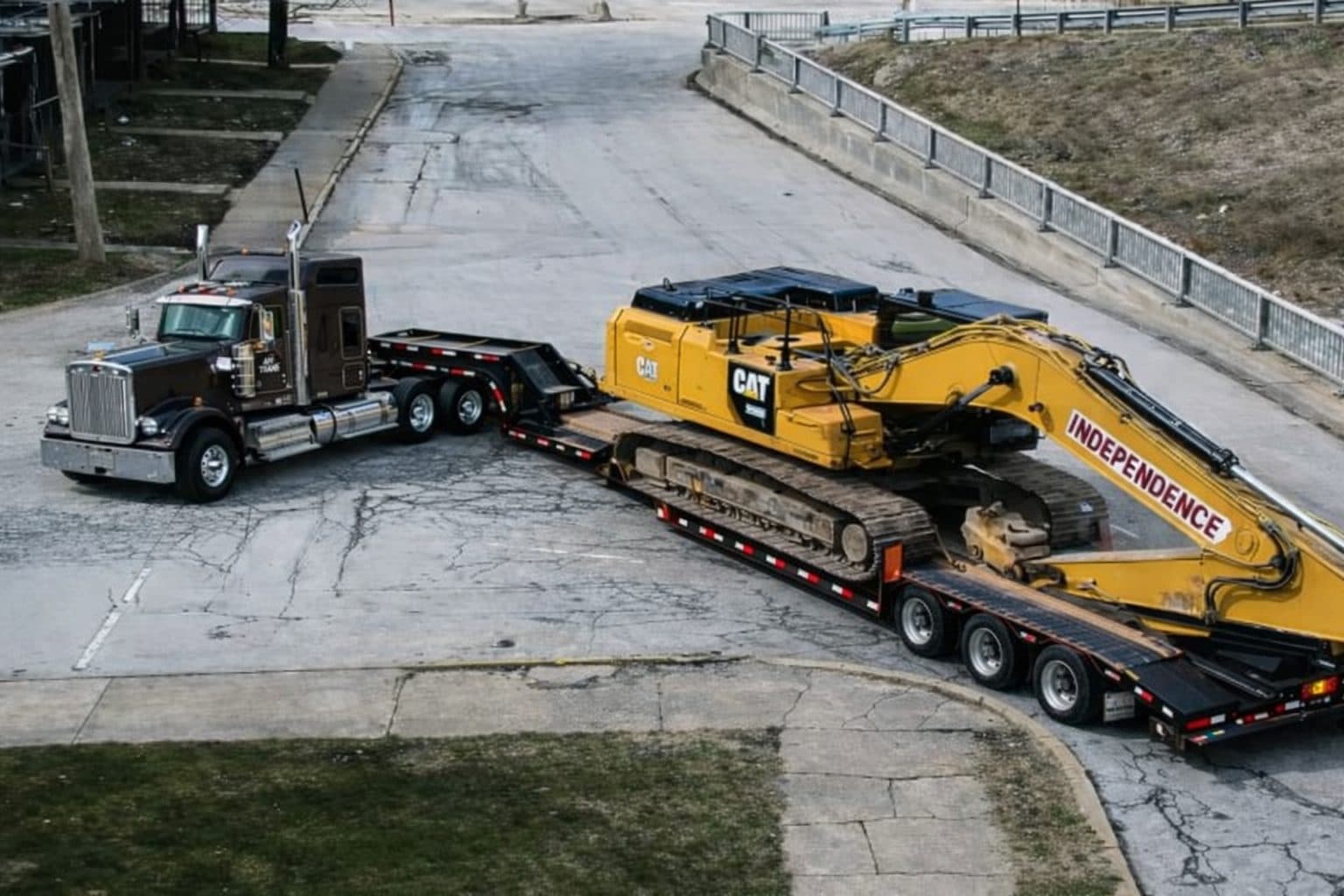
Construction and industrial equipment presents some of the most consistent, and consistently underestimated, challenges in heavy haul. The freight is dense, the geometries are irregular, and the delivery windows are almost always tied to project schedules that punish delay. Getting an excavator, a crane component, or a piece of processing equipment to a site on time takes a workflow that starts long before the load hits the road.
Preparing equipment for transport
Preparation begins at the yard. Every piece of equipment needs to be inspected, drained where applicable, and dimensioned accurately before route planning starts. A published spec sheet is a starting point, not a source of truth; attachments, aftermarket modifications, and unusual configurations routinely change the actual dimensions of a load. We measure everything ourselves before we quote a permit route.
Route planning and permitting
Route planning for oversize construction equipment is a state-by-state exercise. Height clearances, bridge weight limits, and daylight-only travel restrictions vary widely, and the fastest route on a map is almost never the legal one for a wide load. Our permitting team works with each state's DOT to secure the paperwork ahead of the move, including any escort or superload requirements. This work happens in parallel with dispatch, not sequentially, so we don't lose days waiting for approvals.
Loading and securement
Loading is where most incidents originate, and it's where the biggest cost savings live for shippers who work with a disciplined carrier. Our drivers follow standardized blocking and chaining procedures for every equipment category we haul, with photographic pre-trip documentation shared with dispatch before departure. If a load can't be secured to spec, it doesn't move.
Handoff and post-delivery
At destination, we coordinate with the receiving crew ahead of arrival so the offload is efficient and safe. That means confirming crane availability, clearing the offload area, and understanding the site's own restrictions. For contractors juggling multiple deliveries in a tight window, this coordination is often the difference between a productive day and a lost one.
Every one of these steps is table stakes for a serious heavy haul operator. When they all come together, moving a 100,000-pound piece of equipment across a continent stops feeling like an adventure and starts looking like what it should be: a well-executed transport.
More from AM TRANS USA
Fleet & Operations
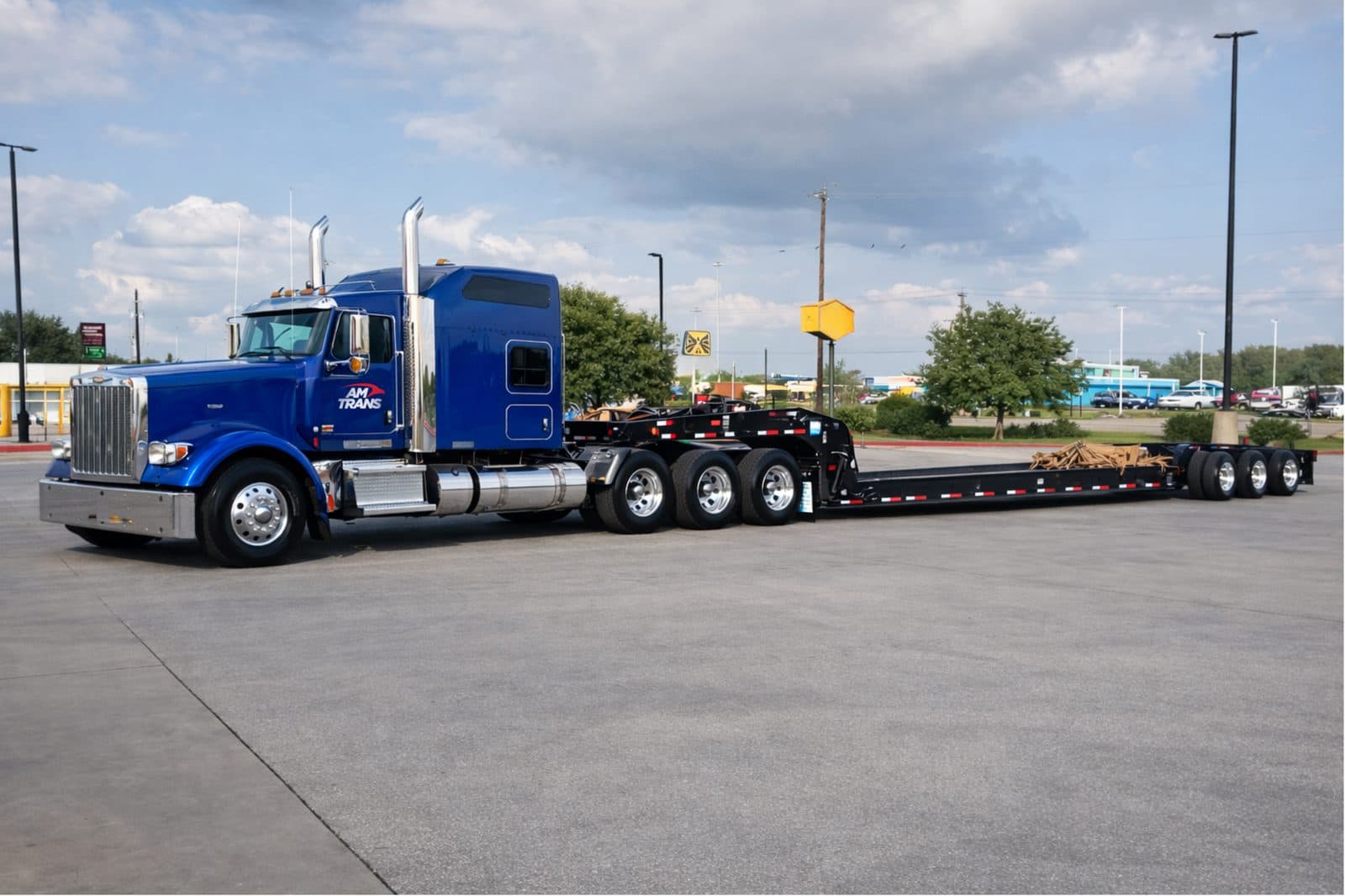
Asset-Based Heavy Haul Transportation
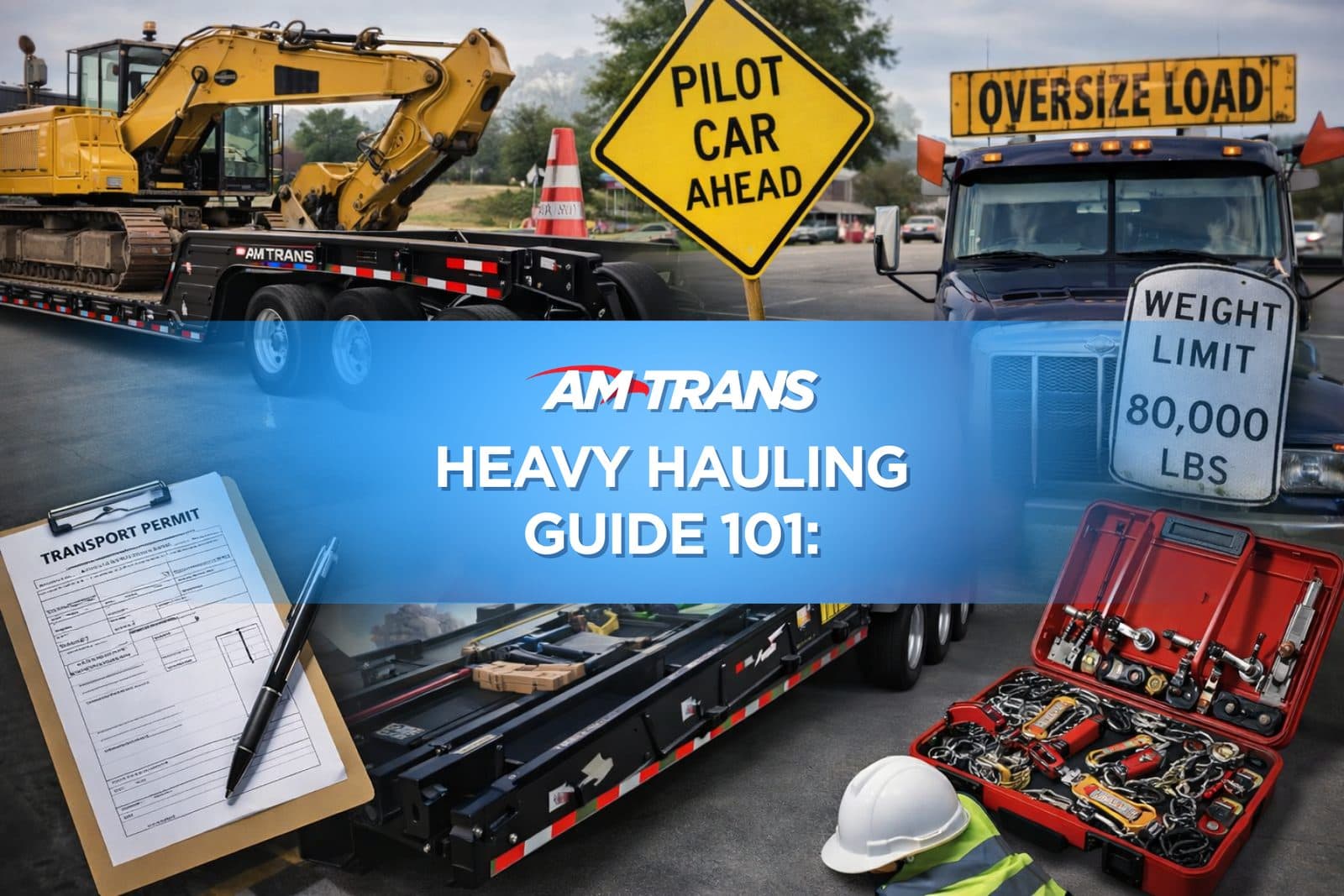
Heavy Hauling Guide
Choosing the Right Heavy Haul Partner
Have a project to plan? Our dispatch team responds within one business day.
Request a Quote